
Our Blog
Expliore the experience from HTEPL, we have various industries experience to manufacturing different types of heat exchangers, cooling towers, and pressure vessels. The consistency of engineering experience makes products perfect.
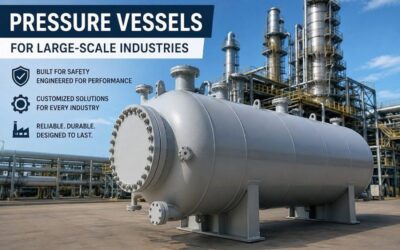
Pressure Vessels for Large Scale Industries
Pressure Vessels for Large-Scale Industries Large-scale industries operate with complex processes where pressure, temperature, flow, and production continuity must remain under control. In such environments, pressure vessels are important process equipment used to...
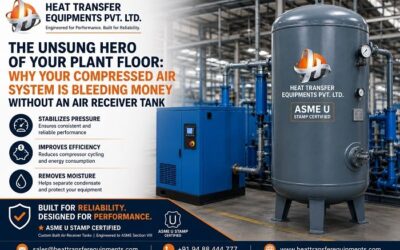
The Unsung Hero of Your Plant Floor: Why Your Compressed Air System Is Bleeding Money Without an Air Receiver Tank
Why Air Receiver Tanks Save Energy in Compressed Air Systems Imagine running a marathon where you aren't allowed to take a deep, steady breath—instead, you have to gasp for tiny sips of air the exact millisecond your body demands it. Exhausting, right? That is...
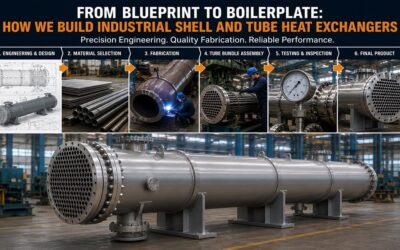
From Blueprint to Boilerplate: How We Build Industrial Shell and Tube Heat Exchangers
How We Build Industrial Shell and Tube Heat Exchangers Industrial processing plants are unforgiving environments. Whether handling corrosive chemicals in a refinery or managing high-pressure steam in a power plant, the thermal equipment holding the process together...
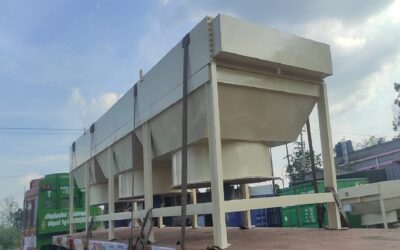
Air-Cooled Heat Exchangers: How They Work and Why Industries Need Them
Air-Cooled Heat Exchangers: How They Work and Why Industries Need Them In industrial manufacturing, controlling the temperature of machinery, chemicals, and gases is vital. For decades, plants relied heavily on water-cooled systems like shell and tube heat...
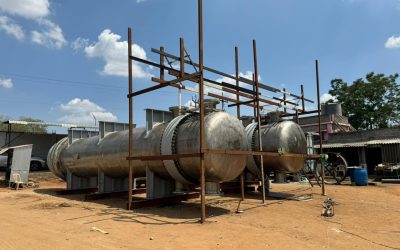
Heat Exchangers Ready for Shipment to Abroad
Heat exchangers are used to transfer heat from one medium to another. These media may be a gas, liquid, or a combination of both. The media may be separated by a solid wall to prevent mixing or may be in direct contact. Heat exchangers are required to provide heating...
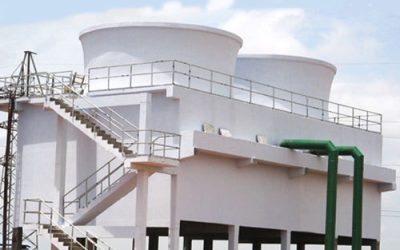
Vast Storage Cooling Towers by HTEPL
When the water and air meet, a small amount of water is evaporated, creating a cooling action. The cooled water is then pumped back to the condenser or process equipment where it absorbs heat. It will then be pumped back to the cooling tower to be cooled once again....