
heattransferequipments.com > products > heat exchangers > cooling towers
HEAT EXCHANGERS & COOLING TOWER MANUFACTURER
Heat Transfer Equipment Pvt Ltd.,
HEAT EXCHANGERS
COOLING TOWERS
Finned Tube Heat Exchanger
A Finned Tube Heat Exchanger is designed to transfer heat between a process fluid flowing inside tubes and air flowing across the external finned surface. Fins increase the effective heat-transfer area available to the surrounding air, making the equipment suitable for applications where air-side heat transfer is an important part of the process.
Unlike water-cooled systems, air-cooled finned tube arrangements can remove or transfer heat using ambient air, reducing dependence on cooling water. The equipment can be engineered with different tube materials, fin configurations, airflow arrangements, and construction details according to the process duty.
What Is a Finned Tube Heat Exchanger?
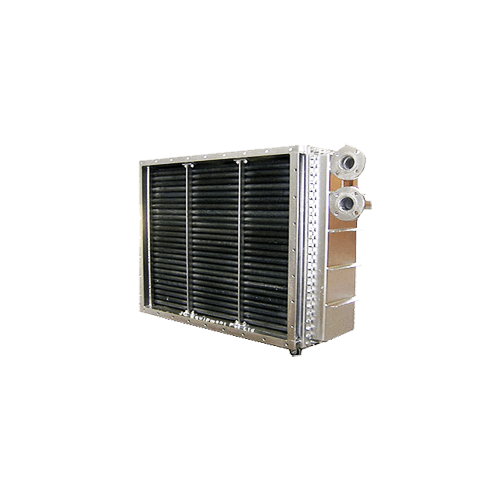
A finned tube heat exchanger consists of heat-transfer tubes fitted with extended surfaces called fins. One process fluid flows through the tubes while air passes over the external finned surface. Heat travels through the tube wall and fins before being transferred to the air.
The addition of fins increases the external surface area without requiring a proportional increase in the overall tube size. This makes finned tube construction particularly useful when the air-side heat-transfer coefficient is relatively low compared with the fluid-side coefficient.
Finned tube heat exchangers can be designed for heating, cooling, condensing, pre-heating, and heat-recovery duties across a wide range of industrial processes.
How Does a Finned Tube Heat Exchanger Work?
The process fluid enters the tube circuit and flows through the internal passage. Air is directed across the outside of the tubes, either naturally or with the assistance of a fan.
When the process fluid is hotter than the surrounding air, heat moves from the fluid through the tube wall and into the fins before being released to the air. For heating applications, the heat-transfer direction can be reversed.
The overall performance depends on factors such as fluid temperature, airflow, tube dimensions, fin geometry, flow rate, material properties, and available heat-transfer surface.
Where a fan is used, it acts as the actuating device that moves air across the finned tubes and helps maintain the required airflow.
Design & Construction
Finned tube heat exchangers are designed around the required heat-transfer duty, operating conditions, fluid characteristics, and installation requirements.
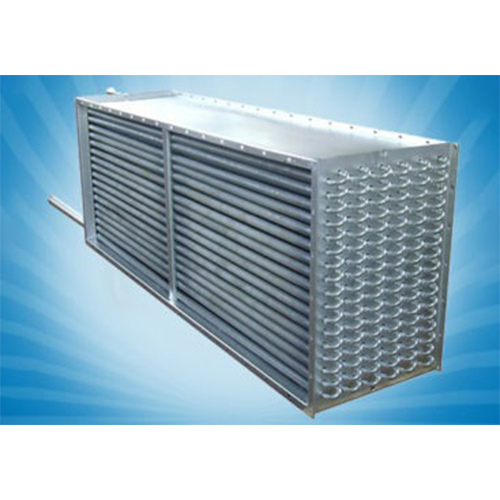
The basic construction may include finned tubes arranged within a supporting structure, along with headers, manifolds, nozzles, fans, drives, and other mechanical components where applicable.
Important design parameters include:
- Tube diameter and thickness
- Tube length and arrangement
- Fin height and thickness
- Fin spacing
- Number of tube rows
- Tube pitch
- Airflow arrangement
- Process-side flow rate
- Air-side flow rate
- Operating and design pressure
- Operating temperature
- Required heat-transfer area
For demanding applications, the construction can be engineered using seamless or welded tubes and suitable pressure-containing materials according to the process requirements.
Key Components
The major elements of a finned tube heat exchanger work together to provide the required heat-transfer performance.
Finned Tubes
The tubes provide the primary passage for the process fluid. Their material, diameter, wall thickness, and configuration are selected according to pressure, temperature, corrosion, and process requirements.
Fins
Fins extend the external heat-transfer surface of the tubes. Aluminum fins are widely used for suitable applications, while copper wire fins and galvanized iron fins may be selected for specific service or cost requirements.
Fan and Airflow System
For forced-air configurations, fans move ambient air across the finned tube bundle. Fan selection depends on the required airflow, pressure drop, operating conditions, and heat-removal duty.
Headers and Connections
Headers, manifolds, and nozzles distribute the process fluid through the tube circuits and provide connections to the plant piping system.
Types of Finned Tube Heat Exchangers
Finned tube heat exchangers can be manufactured using different tube and fin combinations depending on the application.
Stainless Steel Finned Tube Heat Exchanger
Stainless steel construction can be selected for applications requiring improved corrosion resistance and compatibility with demanding process fluids.
Copper Finned Tube Heat Exchanger
Copper tubes and fins can provide good thermal conductivity and may be suitable for specific cooling and heating applications where copper is compatible with the process.
Finned Coil Heat Exchanger
Finned coil configurations use closely arranged finned tubes to provide an extended heat-transfer surface and are commonly used for air-side heating or cooling duties.
Brazed Fin Heat Exchanger
Brazed fin construction uses a bonded tube-and-fin arrangement designed to provide reliable thermal contact between the tube and extended surface.
Aluminium Finned Heat Exchanger
Aluminum fins provide a lightweight extended surface with good thermal conductivity and can be selected for suitable air-side heat-transfer applications.
Tube and Fin Materials
Material selection is based on process fluid compatibility, operating temperature, pressure, corrosion conditions, thermal requirements, and project cost.
Possible tube materials include:
- Carbon steel
- Stainless steel
- Copper
- Admiralty brass
- Copper nickel
- Duplex stainless steel 2205
- Titanium
- Other suitable alloys
Tubes may be supplied in seamless or welded construction depending on the pressure, temperature, material, and applicable design requirements.
For fins, common options include:
- Aluminum fins
- Copper wire fins
- Galvanized iron fins
Aluminum fins are commonly considered where lightweight construction and good thermal conductivity are required. Copper wire fins can be selected for applications requiring high thermal conductivity, while galvanized iron fins may be considered for selected low-cost projects.
Fin Designs & Configurations
Fin geometry has a direct influence on the available heat-transfer area, airflow resistance, mechanical strength, and overall thermal performance.
Depending on the application, finned tubes can be manufactured with different fin arrangements and attachment methods. The selection can consider:
- Fin height
- Fin thickness
- Fin spacing
- Fin density
- Tube diameter
- Fin attachment method
- Airflow conditions
- Operating temperature
- Fouling characteristics
The appropriate fin configuration should provide sufficient surface area while maintaining practical airflow resistance and mechanical durability.
Thermal Performance & Heat Transfer
The primary purpose of the finned tube design is to increase the external heat-transfer surface available to the air. This is especially valuable in applications where air-side heat transfer is less effective than heat transfer on the process-fluid side.
Thermal performance depends on several factors, including:
- Process-fluid temperature
- Ambient-air temperature
- Fluid flow rate
- Airflow rate
- Tube-side heat-transfer coefficient
- Air-side heat-transfer coefficient
- Fin efficiency
- Tube and fin materials
- Surface area
- Fouling conditions
Increasing the finned surface area can improve heat-transfer capacity, but the design must also consider airflow resistance and pressure drop. A balanced design therefore considers thermal duty, air movement, tube-side conditions, and the available installation space together.
Industrial Applications
Finned tube heat exchangers are used across industries where air-based heating, cooling, condensing, or heat recovery is required.
Typical applications include:
- Hydrocarbon processing
- Steam condensers
- Large engine radiators
- Turbine lube oil coolers
- Turbine intercoolers
- Natural gas coolers
- Vapor coolers
- Combustion pre-heaters
- Flue gas reheaters
- Process fluid cooling
- Heat recovery systems
- Industrial air heating and cooling
The final configuration depends on the process duty, fluid properties, required temperature range, airflow conditions, and operating environment.
Common Uses of Finned Tube Heat Exchangers
Finned tube heat exchangers can perform several different heat-transfer duties depending on how the process and air streams are arranged.
Cooling
Hot process fluids can be cooled by transferring heat to ambient air. This can be useful for oils, gases, process fluids, and other suitable media.
Condensing
When designed for condensation service, the exchanger can remove latent heat from a vapor and transfer it to the surrounding air.
Pre-Heating
Heat recovered from a process stream can be used to pre-heat combustion air or another process stream, improving overall energy utilization.
Heat Recovery
Finned tube systems can recover usable heat from hot process gases or fluids that would otherwise release energy to the surroundings.
Gas Cooling
Natural gas and other process gases can be cooled by passing ambient air across the finned tube surface.
Lube Oil Cooling
Finned tube heat exchangers can be used for turbine and machinery lube oil cooling where reliable temperature control is required.
Key Advantages
Finned tube heat exchangers offer several practical benefits for industrial heating and cooling applications:
- Increased heat-transfer surface area
- Air-based cooling without direct cooling-water contact
- Suitable for high-temperature process duties
- Flexible tube and fin material selection
- Suitable for heating, cooling, and heat recovery
- Can be designed for different airflow arrangements
- Applicable to gas and liquid process streams
- Compact extended-surface construction
- Reduced dependence on cooling water
- Flexible configuration for different process requirements
- Suitable for demanding industrial applications
The actual performance and operating cost depend on the selected configuration, process conditions, ambient temperature, airflow requirements, and equipment sizing.
Design Considerations
Proper sizing is essential to achieve the required thermal performance and reliable operation.
Key design considerations include:
- Heat-transfer duty
- Process-fluid properties
- Inlet and outlet temperatures
- Ambient-air temperature
- Process-side pressure
- Design pressure and temperature
- Airflow rate
- Allowable pressure drop
- Tube dimensions
- Fin geometry
- Fin spacing
- Material compatibility
- Fouling tendency
- Corrosion conditions
- Installation space
- Fan capacity, where applicable
For high-pressure applications, tube wall thickness, material selection, headers, connections, and mechanical design must be evaluated carefully.
Material selection should also consider the process fluid, operating environment, expected service life, and applicable engineering requirements.
Cleaning & Maintenance
Regular inspection and cleaning help maintain heat-transfer efficiency and airflow through the finned tube bundle.
Maintenance requirements can include:
- Removing dust and debris from fin surfaces
- Inspecting fins for mechanical damage
- Checking tube surfaces for corrosion
- Inspecting headers and connections
- Checking for process-fluid leakage
- Cleaning accumulated deposits
- Inspecting fan blades and drive components
- Checking airflow performance
- Verifying operating temperatures
- Inspecting supports and structural components
The cleaning method should be selected according to the fin material, tube construction, type of deposit, and operating environment. Excessive mechanical force should be avoided because it can damage closely spaced fins.
Industries Served
Finned tube heat exchangers can be engineered for applications across multiple industrial sectors, including:
- Oil and gas
- Petrochemical
- Chemical processing
- Power generation
- Refineries
- Natural gas processing
- Pharmaceutical industries
- Food and beverage processing
- Process industries
- Heavy engineering
- Manufacturing plants
The equipment can be customised according to the required heat-transfer duty, process conditions, materials, airflow arrangement, and installation requirements.
Frequently Asked Questions (FAQ)
What is a finned tube heat exchanger?
A finned tube heat exchanger transfers heat between a process fluid inside the tubes and air flowing over the external finned surface. The fins increase the available heat-transfer area.
Why are fins used on heat exchanger tubes?
Fins increase the external surface area available for heat transfer. This helps improve heat exchange with air, particularly where the air-side heat-transfer coefficient is relatively low.
What materials are commonly used for finned tubes?
Tube materials can include carbon steel, stainless steel, copper, copper nickel, Admiralty brass, duplex stainless steel, titanium, and other suitable alloys. Aluminum and copper are commonly used for fins in suitable applications.
Can a finned tube heat exchanger work without cooling water?
Yes. Air-cooled finned tube arrangements can use ambient air to transfer heat from the process fluid, reducing dependence on cooling-water systems.
Where are finned tube heat exchangers commonly used?
They are used for applications such as hydrocarbon processing, steam condensation, turbine lube oil cooling, engine cooling, natural gas cooling, combustion air pre-heating, and flue gas reheating.
What factors affect finned tube heat exchanger performance?
Performance is influenced by process-fluid flow rate, air temperature, airflow, tube and fin materials, fin geometry, heat-transfer area, temperature difference, fouling, and allowable pressure drop.
Can finned tube heat exchangers be designed for high-pressure applications?
Yes. They can be engineered for high-pressure services by selecting suitable tube materials, wall thicknesses, headers, connections, and mechanical design parameters according to the process requirements.
How can a finned tube heat exchanger be maintained?
Maintenance generally involves keeping the fin surfaces clean, inspecting tubes and connections, checking for corrosion or leakage, maintaining airflow, and servicing fans or drive systems where applicable.
Request a Quote for a Finned Tube Heat Exchanger
Looking for a finned tube heat exchanger designed around your specific process conditions? Share your heat-transfer duty, fluid details, flow rates, operating temperatures, pressure requirements, ambient conditions, and material preferences with our engineering team.
We can develop a suitable finned tube heat exchanger configuration for cooling, heating, condensation, heat recovery, pre-heating, and other industrial applications.
Contact us to discuss your requirement and receive a customised technical proposal and quotation.