
heattransferequipments.com > products > heat exchangers > cooling towers
HEAT EXCHANGERS & COOLING TOWER MANUFACTURER
Heat Transfer Equipment Pvt Ltd.,
HEAT EXCHANGERS
COOLING TOWERS
Natural Draft Cooling Tower
Heat Transfer Equipments Pvt. Ltd. is a Natural Draft Cooling Tower manufacturer in India, providing customized cooling tower solutions for large industrial and process cooling applications.
Natural Draft Cooling Towers use the natural movement of air to transfer heat from circulating water to the atmosphere. Unlike mechanically induced or forced draft systems, the airflow is generated primarily by the difference in density between warm air inside the tower and cooler ambient air outside.
The tower configuration, dimensions, water distribution system, fill arrangement, and structural design can be selected according to cooling capacity, circulating-water flow, ambient conditions, and project requirements.
What Is a Natural Draft Cooling Tower?
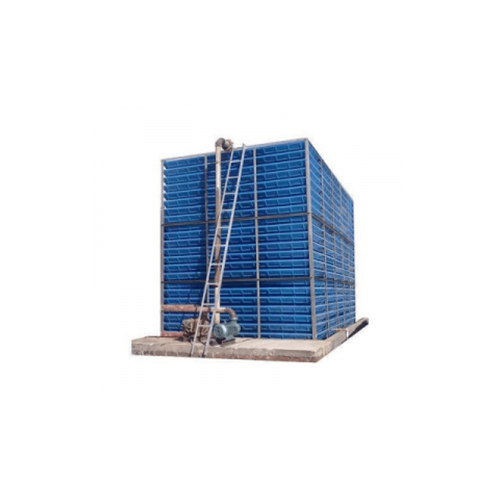
A Natural Draft Cooling Tower is an evaporative cooling system that uses natural air movement rather than mechanical fans as the primary means of creating airflow.
Warm process water is distributed inside the tower and comes into contact with moving air. A small portion of the water evaporates, removing heat from the circulating water.
The heated, moist air becomes less dense and rises through the tower. Cooler ambient air enters the lower portion, creating a continuous natural airflow.
Natural Draft Cooling Towers are generally considered for applications where large cooling capacities, continuous operation, and low fan-related power consumption are important.
How Does a Natural Draft Cooling Tower Work?
The operating principle is based on natural convection and evaporative heat transfer.
Warm water from the industrial process enters the cooling tower and is distributed over the cooling area. As air moves naturally through the tower, heat is transferred from the water to the air and part of the water evaporates.
The warm, moisture-laden air rises because it is less dense than the surrounding ambient air. This upward movement draws cooler air into the lower sections of the tower.
The cooled water collects in the basin and is returned to the industrial process. Cooling performance depends on water flow, ambient wet-bulb temperature, tower dimensions, air movement, fill characteristics, water distribution, and required cooling range.
Natural Draft Cooling Tower Construction and Components
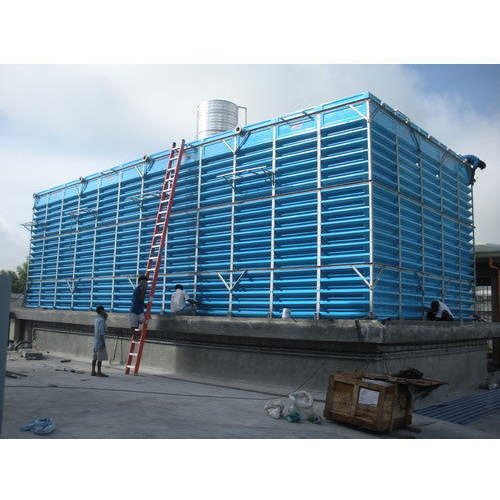
Natural Draft Cooling Towers are designed as large-scale structures with components selected according to the required cooling performance and operating environment.
Typical components can include:
- Cooling tower structure
- Water distribution system
- Spray nozzles or distribution pipes
- Cooling fill where applicable
- Drift eliminators where applicable
- Hot-water distribution section
- Cold-water collection basin
- Air inlet openings
- Supporting structures
- Access platforms and maintenance arrangements
Tower height, diameter, water distribution arrangement, fill configuration, basin dimensions, and structural details can be designed according to project requirements.
Types of Natural Draft Cooling Towers
Different natural-draft configurations can be considered according to cooling duty, site conditions, and plant requirements.
Hyperbolic Natural Draft Cooling Towers
Hyperbolic towers use a tall, curved shell structure to promote natural airflow through the tower. This configuration is commonly associated with large-scale cooling applications.
Natural Draft Cooling Towers for Large Industrial Plants
Large natural-draft towers can be designed for high circulating-water flow rates and continuous industrial cooling requirements.
Natural Draft and Mechanical Draft Cooling Systems
Natural-draft and mechanical-draft systems use different methods to move air through the tower. The appropriate arrangement depends on cooling duty, site conditions, energy requirements, footprint, and project economics.
Key Natural Draft Cooling Tower Selection Factors
Proper selection and sizing are important for achieving the required cooling performance.
Important factors include:
- Required cooling capacity
- Circulating-water flow rate
- Hot-water inlet temperature
- Required cold-water outlet temperature
- Design wet-bulb temperature
- Ambient operating conditions
- Cooling range
- Approach temperature
- Tower height and dimensions
- Water distribution arrangement
- Fill requirements
- Drift control requirements
- Water quality
- Available land and installation space
- Structural and site conditions
- Maintenance access
The final tower configuration should be established according to actual process conditions, environmental conditions, and project specifications.
Advantages of Natural Draft Cooling Towers
Natural Draft Cooling Towers can provide several benefits for suitable large-scale cooling applications:
- No primary requirement for mechanical fans to create airflow
- Reduced dependence on fan and motor systems
- Lower fan-related electrical power consumption
- Suitable for large circulating-water cooling duties
- Continuous natural airflow during suitable ambient conditions
- Suitable for large industrial and power-generation facilities
- Long-term operation with appropriate maintenance
- Can be designed for high-capacity cooling applications
Actual performance and operating economics depend on tower design, ambient conditions, water flow, cooling duty, site conditions, and maintenance practices.
Natural Draft Cooling Tower Applications
Natural Draft Cooling Towers are generally considered for large industrial facilities where significant quantities of circulating water need to be cooled.
Thermal Power Plants
Natural Draft Cooling Towers can support large-scale cooling-water systems associated with thermal power generation.
Nuclear Power Plants
They can be considered for suitable cooling-water applications in nuclear power facilities, subject to the required project, safety, and design specifications.
Cement Plants
Natural-draft cooling systems can support selected process and equipment cooling requirements in large cement manufacturing facilities.
Oil and Petrochemical Plants
They can be used for large circulating-water cooling systems in oil refining and petrochemical processing facilities.
Chemical Industries
Natural Draft Cooling Towers can support cooling-water requirements in suitable chemical process plants.
Steel Plants
Large cooling towers can be used for circulating-water cooling associated with selected steel manufacturing and processing equipment.
Foundries
Natural-draft systems can be considered for cooling-water applications in large foundry and metal-processing facilities.
Chilling Plants
They can support heat rejection requirements for selected large-scale chilling and utility systems.
Natural Draft Cooling Tower Maintenance and Common Issues
Although natural-draft systems do not depend primarily on mechanical fans, regular inspection and water-system maintenance remain important.
Cooling Tower Inspection
Structural components, water distribution systems, fill, drift eliminators, basin areas, access arrangements, and other critical components should be inspected periodically.
Common Operating Issues
Potential issues can include scaling, fouling, algae growth, blocked distribution passages, excessive drift, uneven water distribution, structural deterioration, and reduced cooling performance.
Monitoring water temperatures, flow rates, water quality, and operating conditions can help identify developing problems.
Cleaning and Water Management
Maintenance may include basin cleaning, water distribution inspection, fill cleaning where applicable, water treatment, deposit removal, and structural inspection.
The maintenance schedule should be established according to water quality, operating conditions, environmental exposure, and plant requirements.
Custom Natural Draft Cooling Tower Solutions
Heat Transfer Equipments Pvt. Ltd. provides customized Natural Draft Cooling Tower solutions based on specific industrial cooling requirements.
Our engineering approach considers cooling capacity, circulating-water flow rate, inlet and outlet water temperatures, design wet-bulb temperature, cooling range, tower dimensions, water distribution, fill requirements, drift control, site conditions, structural requirements, and maintenance access.
The tower can be developed according to the required thermal performance, structural conditions, installation environment, and project specifications.
Natural Draft Cooling Tower Manufacturing and Quality
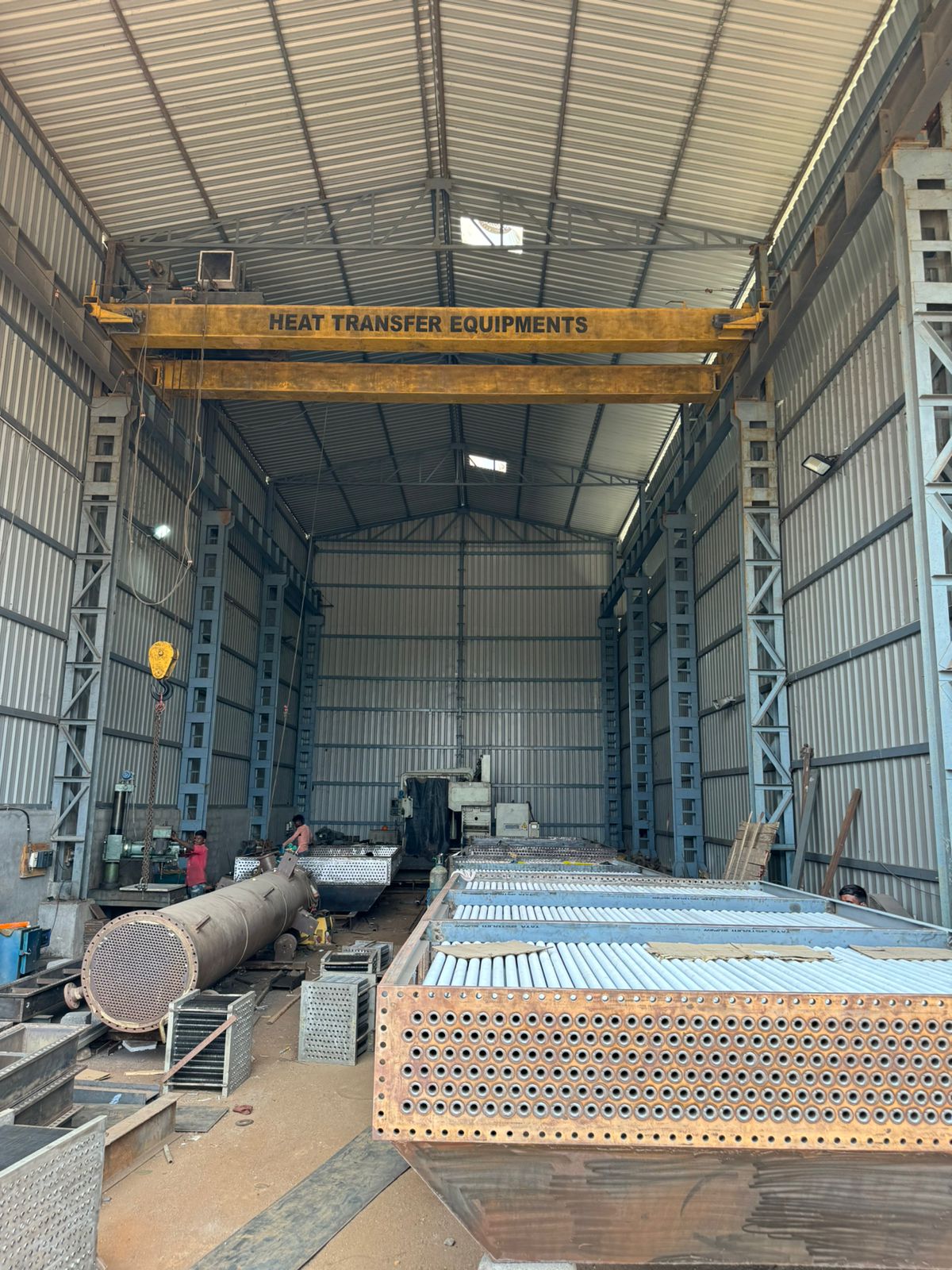
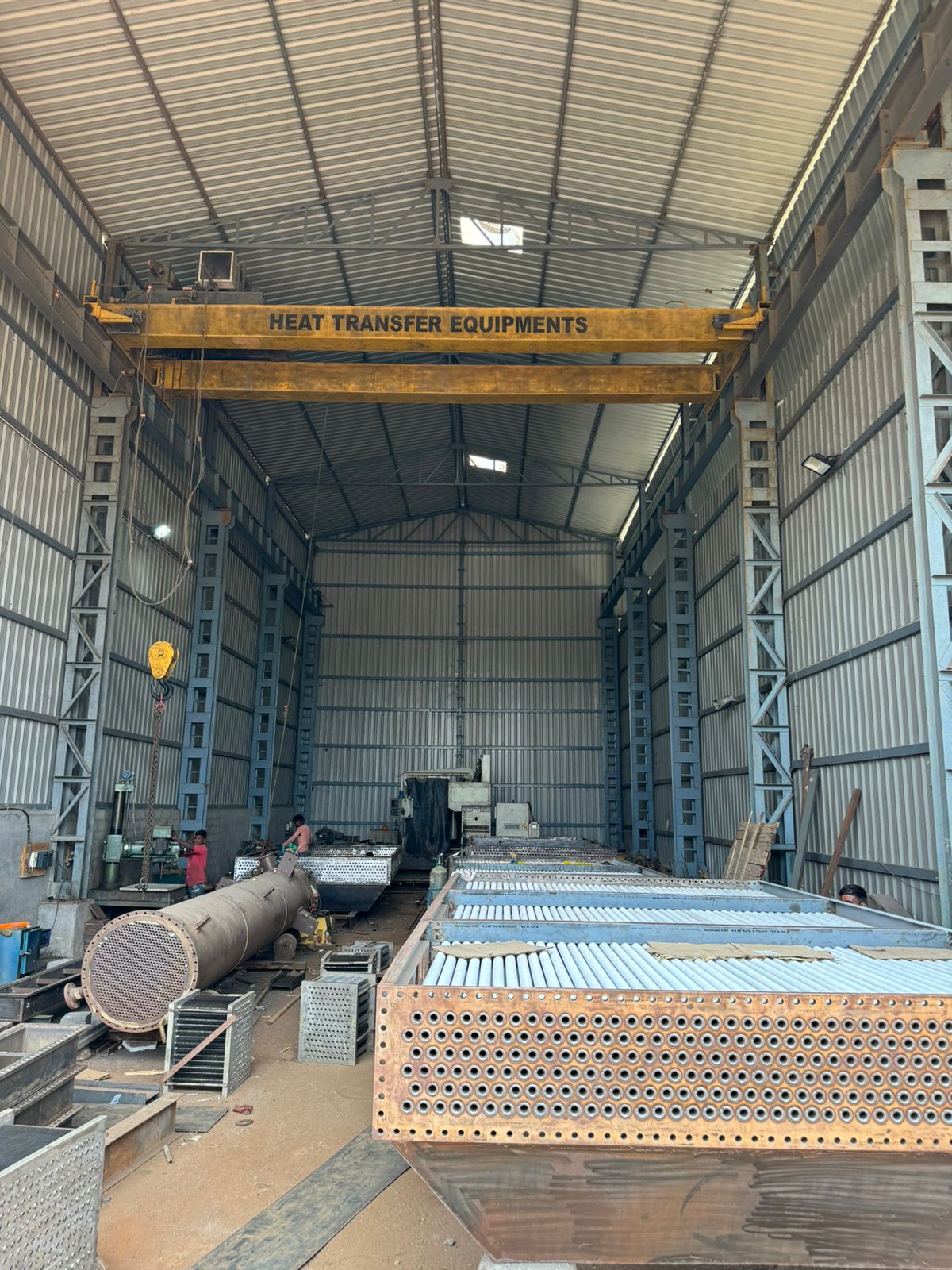
Heat Transfer Equipments Pvt. Ltd. focuses on developing cooling tower solutions according to application requirements, project specifications, operating conditions, and site considerations.
Application-Based Engineering
Tower configuration is selected according to cooling duty, water flow rate, ambient conditions, process requirements, and site conditions.
Material Selection
Construction materials are selected according to structural requirements, moisture exposure, water conditions, environmental conditions, and expected service life.
Customized Construction
Tower dimensions, water distribution systems, fill arrangements, basin configuration, structural components, and access provisions can be customized according to project requirements.
Inspection and Testing
Fabrication, assembly, inspection, and testing activities can be carried out according to applicable project specifications and quality requirements.
Project-Specific Technical Support
Technical discussions and equipment development are focused on the customer’s cooling requirements, site conditions, installation constraints, and maintenance needs.
Frequently Asked Questions
Why Are Natural Draft Cooling Towers Used for Large Plants?
Natural Draft Cooling Towers can handle large circulating-water cooling requirements without relying primarily on mechanical fans for airflow. Their suitability depends on site conditions, cooling duty, ambient temperature, and project requirements.
Do Natural Draft Cooling Towers Require Fans?
Natural Draft Cooling Towers are designed to generate airflow through natural convection and tower geometry. Therefore, mechanical fans are not normally required as the primary airflow mechanism.
What Factors Determine Natural Draft Cooling Tower Size?
Tower size depends on cooling capacity, circulating-water flow rate, inlet and outlet water temperatures, design wet-bulb temperature, cooling range, approach, airflow requirements, water distribution, and site conditions.
How Are Natural Draft Cooling Towers Maintained?
Maintenance includes inspection of the structure, water distribution system, fill where applicable, basin, drift-control components, and water quality. Regular cleaning and water treatment can help maintain cooling performance.
Can You Manufacture Natural Draft Cooling Towers in India?
Yes. Heat Transfer Equipments Pvt. Ltd. provides customized Natural Draft Cooling Tower solutions in India based on cooling capacity, water flow rate, operating conditions, site requirements, dimensions, and project specifications.
Request a Quote for a Natural Draft Cooling Tower
Looking for a reliable Natural Draft Cooling Tower manufacturer in India?
Share your cooling capacity, circulating-water flow rate, hot-water inlet temperature, required cold-water outlet temperature, design wet-bulb temperature, water quality, site conditions, available space, and other project details with our engineering team.
Heat Transfer Equipments Pvt. Ltd. can provide a customized Natural Draft Cooling Tower solution based on your process and cooling requirements.