
heattransferequipments.com > products > heat exchangers > cooling towers
HEAT EXCHANGERS & COOLING TOWER MANUFACTURER
Heat Transfer Equipment Pvt Ltd.,
HEAT EXCHANGERS
COOLING TOWERS
Removable Tube Sheet Heat Exchanger
A Removable Tube Sheet Heat Exchanger is a shell-and-tube heat transfer system designed with a withdrawable tube bundle, making inspection, cleaning, repair, and replacement more accessible than in a permanently fixed arrangement. The removable construction is particularly useful when the process involves fouling, deposits, corrosion, or operating conditions that require regular maintenance.
The equipment can be engineered for heating, cooling, condensation, and heat recovery duties across a wide range of industrial processes. Depending on the application, straight-tube floating-head or other removable-bundle configurations can be selected to accommodate process requirements, cleaning needs, and temperature differences.
Because the bundle can be withdrawn from the shell, both the tube bundle and shell-side surfaces can be accessed more effectively during maintenance. Floating tube-sheet arrangements can also accommodate differential thermal expansion between the shell and tube bundle, which is valuable in services involving significant temperature differences.
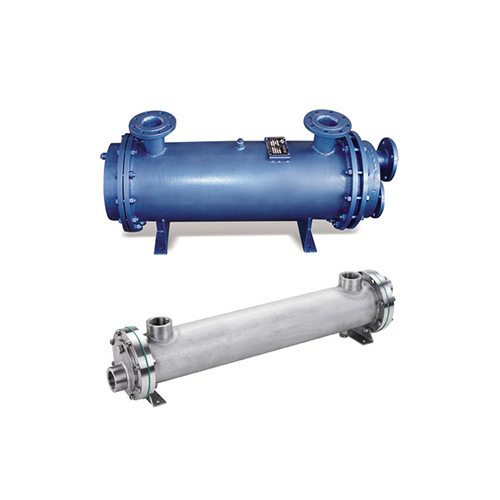
What Is a Removable Tube Sheet Heat Exchanger?
A removable tube sheet arrangement allows the tube bundle to be separated from the shell for inspection and servicing. The bundle generally consists of tubes, tube sheets, baffles, tie rods, and associated supports. Depending on the selected configuration, the bundle can be withdrawn through the appropriate shell or channel end.
This design is particularly useful when access to the shell side is important. Once the bundle is removed, deposits can be inspected and suitable mechanical or chemical cleaning methods can be applied. Damaged tubes can also be evaluated for plugging, repair, or replacement.
Compared with a fixed tube sheet construction, the removable arrangement offers greater maintenance flexibility and is often considered for services where fouling or regular inspection is expected.
How Does It Work?
The heat exchanger keeps the two process fluids in separate flow paths. One fluid travels through the tubes while the other flows across the outer surfaces of the tubes within the shell.
Heat passes through the tube wall from the hotter stream to the cooler stream. Baffles can direct shell-side flow across the tube bundle to improve fluid distribution and support the tubes mechanically.
The exact flow arrangement depends on the process duty. Single-pass and multi-pass tube-side configurations can be developed according to required heat-transfer performance, allowable pressure drop, and process conditions.
In floating-head designs, the rear tube sheet can move relative to the shell. This allows the tube bundle to accommodate thermal expansion without imposing the same degree of differential expansion stress associated with a rigid fixed arrangement.
Construction & Components
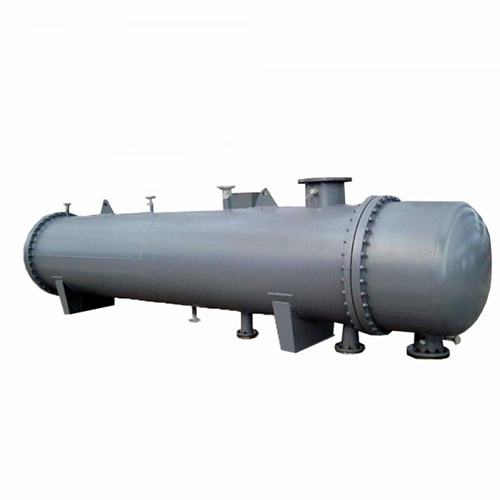
A typical removable-bundle exchanger includes several major components:
Shell : The pressure-containing body that carries the shell-side fluid.
Tube Bundle : A collection of heat-transfer tubes supported inside the shell.
Tube Sheets: Plates that hold and seal the tube ends. In removable arrangements, the bundle and associated tube-sheet assembly are designed for withdrawal.
Baffles: Support the tubes and guide shell-side flow across the bundle.
Channel or Bonnet: Directs tube-side fluid into and out of the tube passes.
Floating Head: Used in applicable configurations to allow movement caused by thermal expansion while maintaining fluid separation.
Nozzles: Provide process connections for inlet, outlet, venting, draining, and other requirements.
Gaskets and Sealing Components: Maintain pressure boundaries between different sections of the equipment.
The exact arrangement depends on the selected TEMA configuration, pressure rating, temperature range, fluid characteristics, and maintenance requirements.
Tube Bundle & Pass Arrangements
Removable designs can be configured with different tube layouts and pass arrangements depending on the process requirement.
A single-pass arrangement provides a straightforward tube-side flow path and can be considered where pressure drop needs to remain relatively low.
A multi-pass arrangement changes the direction of tube-side flow through channel partitions, increasing the effective flow path and potentially improving heat-transfer performance for suitable applications.
Removable bundles may also use different tube configurations, including straight-tube floating-head arrangements and U-tube designs. U-tube bundles provide considerable freedom for thermal expansion, while straight-tube floating-head arrangements offer the advantage of straight tubes combined with bundle removal.
Materials of Construction
Material selection depends on the process fluid, operating temperature, pressure, corrosion characteristics, and expected service life.
Common material options include:
- Carbon steel
- Stainless steel
- Duplex stainless steel
- Copper and copper alloys
- Nickel-based alloys
- Other specialised corrosion-resistant materials
Stainless steel may be selected for applications requiring improved corrosion resistance, while copper alloys can be considered for suitable water and heat-transfer services. More specialised alloys may be required when the process involves aggressive chemicals or demanding temperatures.
The shell, tubes, tube sheets, and other components do not necessarily need to use the same material. Material selection should be based on compatibility with each individual service condition.
Industrial Applications
The removable construction can be useful across process systems where cleaning access and maintainability are important.
Typical applications include:
- Oil heating and cooling systems
- Compressor cooling systems
- Lubricating oil consoles
- Hydraulic systems
- Stationary engine cooling
- Turbine systems
- Marine equipment
- Paint processing systems
- Air dryers
- Vapour recovery systems
- Chemical process equipment
- Petrochemical systems
- Power generation equipment
The configuration can be selected according to the fluid properties, fouling tendency, operating pressure, temperature difference, and required maintenance frequency.
For services with significant fouling, removable bundles can provide an important maintenance advantage because the bundle can be withdrawn for inspection and cleaning.
Key Advantages
A removable arrangement offers several practical benefits for industrial users:
- Easier access for inspection
- Improved shell-side cleaning access
- Tube bundle can be withdrawn for maintenance
- Damaged tubes can be inspected and repaired
- Suitable for applications requiring regular cleaning
- Supports different tube-side pass arrangements
- Can accommodate substantial temperature differences in appropriate floating-head configurations
- Provides flexibility for future maintenance
- Suitable for demanding industrial services
- Can provide a large heat-transfer surface within the available shell dimensions
The main benefit is not simply the ability to remove the bundle; it is the maintenance flexibility that comes with that arrangement. TEMA guidance specifically recognises removable bundles as providing better shell-side access for inspection and cleaning compared with fixed designs.
Design Considerations
Proper engineering is important to achieve the required thermal performance and mechanical reliability.
Important design parameters include:
- Heat-transfer duty
- Fluid flow rates
- Inlet and outlet temperatures
- Operating pressure
- Design pressure
- Operating temperature
- Allowable pressure drop
- Fluid properties
- Fouling characteristics
- Tube diameter and length
- Tube pitch
- Number of tube passes
- Shell diameter
- Material selection
- Corrosion allowance
- Thermal expansion
- Maintenance requirements
Thermal expansion deserves particular attention in applications with large temperature differences. Floating tube-sheet arrangements allow the bundle to move relative to the shell and can therefore accommodate differential thermal expansion more effectively.
The selected configuration should also consider how frequently the bundle may need to be removed and what type of cleaning equipment will be available at the installation site.
Cleaning & Maintenance
Maintaining clean heat-transfer surfaces is essential for consistent exchanger performance. Over time, scale, deposits, corrosion products, oil residues, or other contaminants may accumulate on the tube and shell-side surfaces.
Depending on the service, maintenance may involve:
- Visual inspection
- Tube-side cleaning
- Shell-side mechanical cleaning
- Chemical cleaning
- Tube thickness inspection
- Leak testing
- Tube plugging
- Tube replacement
- Gasket inspection and replacement
- Baffle and support inspection
One of the major advantages of a removable bundle is improved access during maintenance. After the bundle is withdrawn, technicians can inspect the tube surfaces and shell interior more effectively. TEMA guidance also notes that heat-transfer surfaces should be kept reasonably clean and that cleaning methods may be mechanical or chemical depending on the service.
Removable vs. Fixed Tube Sheet
The main difference is accessibility and mechanical arrangement.
A fixed tube sheet exchanger has the tube sheets permanently connected to the shell. This provides a relatively simple and compact construction, but shell-side mechanical cleaning is more restricted.
A removable tube sheet or removable-bundle design allows the bundle to be withdrawn, providing better access for inspection and cleaning. This makes it more suitable for applications where fouling, maintenance frequency, or large temperature differences are important considerations.
The removable arrangement generally involves more components and can have a higher initial cost than a simple fixed design. Therefore, the selection should be based on the complete lifecycle requirements rather than equipment price alone.
Industries Served
Removable-bundle heat exchangers can be engineered for a wide variety of industrial environments, including:
- Oil and gas
- Petrochemical
- Chemical processing
- Power generation
- Marine
- Pharmaceutical
- Food processing
- Automotive and engine systems
- Paint and coating industries
- Manufacturing plants
- Process industries
The equipment can be customised according to process duty, available space, fluid characteristics, pressure and temperature requirements, and maintenance strategy.
Frequently Asked Questions :
Q1 : Is a removable design suitable for high-pressure applications?
Yes. The exchanger can be engineered for high-pressure service using an appropriate mechanical configuration, materials, tube dimensions, and pressure rating.
Q2 : What makes a removable bundle useful for maintenance?
The bundle can be withdrawn from the shell, giving maintenance personnel better access to the tube surfaces, baffles, and shell interior for inspection and cleaning.
Q3 : Can the tube bundle be replaced if tubes are damaged?
Yes. Depending on the design and extent of damage, individual tubes may be plugged or repaired, while the complete bundle can also be removed for more extensive maintenance.
Q4 : Is a removable design suitable for fouling services?
It can be a strong option where regular shell-side inspection and mechanical cleaning are required. Removable bundles are commonly considered for dirty services where maintenance access is important.
Q5 : What materials can be used for the tubes?
Stainless steel, copper alloys, carbon steel, duplex grades, and specialised alloys can be considered depending on fluid compatibility and operating conditions.
Q6 : Can the exchanger be designed with multiple tube passes?
Yes. The tube-side flow arrangement can be configured with multiple passes when required by the thermal and hydraulic design.
Q7 : Does a removable design accommodate thermal expansion?
Floating tube-sheet configurations can accommodate differential expansion between the tube bundle and shell, making them useful for applications with significant temperature differences.
Q8 : What information is required for selecting the right exchanger?
Important information includes fluid names, flow rates, inlet and outlet temperatures, operating and design pressures, allowable pressure drop, fluid properties, fouling tendency, material requirements, and available installation space.
Request a Quote for a Removable Tube Sheet Heat Exchanger
Looking for a reliable heat exchanger designed around your process requirements? Share your operating conditions, fluid details, flow rates, pressure, temperature, and heat-transfer duty with our engineering team. We can develop a suitable removable tube sheet heat exchanger configuration based on your application, maintenance requirements, and material specifications.
Contact us to discuss your requirement and receive a customised technical proposal and quotation.