
heattransferequipments.com > products > heat exchangers > cooling towers
HEAT EXCHANGERS & COOLING TOWER MANUFACTURER
Heat Transfer Equipment Pvt Ltd.,
HEAT EXCHANGERS
COOLING TOWERS
Air Cooled Condenser
An Air Cooled Condenser (ACC) is a heat-transfer system designed to condense steam or other vapours by transferring heat directly to atmospheric air. Unlike water-cooled condensers, an air cooled system does not require a continuous supply of cooling water, making it suitable for locations where water availability is limited or water conservation is important.
The commonly used modular A-frame configuration provides a compact and scalable arrangement for large heat-transfer duties. Air cooled condensers are widely applied in thermal power plants, industrial process facilities, gas-based plants, oil and biomass power-generation systems, and other applications where reliable vapour condensation is required.
What Is an Air Cooled Condenser?
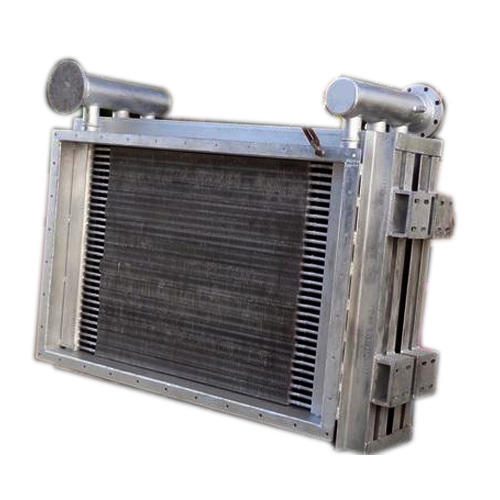
An Air Cooled Condenser is a finned-tube heat exchanger that uses ambient air as the cooling medium. Hot steam enters the condenser system and flows through the finned tube bundles, while air passes over the external tube surfaces.
Heat from the steam is transferred through the tube wall and fins to the surrounding air. As the steam loses its latent heat, it changes from vapour into liquid condensate, which is collected and transferred through the condensate extraction system.
Because the cooling medium is atmospheric air, the system can significantly reduce dependence on cooling water and associated water-treatment infrastructure.
How Does an Air Cooled Condenser Work?
The steam enters the steam distribution system and is directed towards the finned tube bundles. Large fans move ambient air across the external surfaces of the tubes.
The heat contained in the steam passes through the tube wall and extended fin surfaces into the air stream. As the steam cools, condensation takes place inside the tubes and the resulting condensate flows towards the condensate collection and extraction system.
The overall performance depends on several operating parameters, including:
- Steam flow rate
- Steam pressure and temperature
- Ambient air temperature
- Airflow rate
- Tube and fin configuration
- Heat-transfer surface area
- Fan capacity
- Condensate drainage arrangement
Proper airflow distribution and thermal design are important for maintaining stable condenser performance under changing ambient conditions.
Air Cooled Condenser Design & Construction
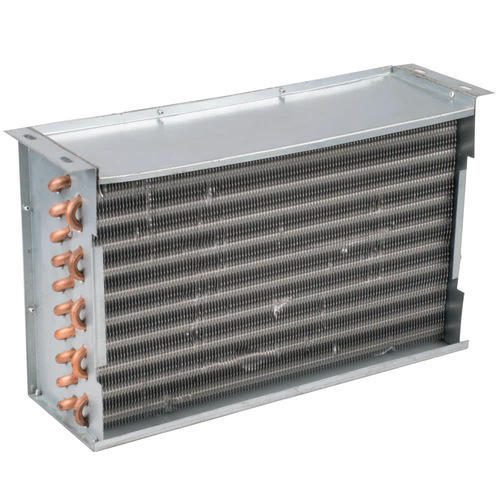
Air cooled condensers are generally designed as modular finned-tube assemblies. The A-frame configuration is widely used for large installations because the inclined tube bundles provide an effective heat-transfer arrangement while allowing fans to be positioned below the bundles.
The system can be engineered according to the required condensing duty, steam conditions, ambient temperature, installation space, and plant operating requirements.
Important design parameters include:
- Required heat-transfer capacity
- Steam flow and operating pressure
- Design ambient temperature
- Tube and fin dimensions
- Airflow requirements
- Fan diameter and capacity
- Tube bundle arrangement
- Condensate drainage
- Pressure drop
- Structural requirements
- Thermal expansion
- Maintenance accessibility
Modular construction also allows multiple condenser sections to be combined to achieve the required capacity.
Major Components of an Air Cooled Condenser
An ACC system consists of several mechanical, thermal, and auxiliary components working together.
Finned Tube Bundles
The finned tube bundles provide the primary heat-transfer surface. Fins increase the external surface area available for transferring heat from the steam to ambient air.
Fans
Fans generate the airflow required to remove heat from the tube bundles. Fan selection depends on required airflow, static pressure, operating conditions, and condenser capacity.
Motors and Gearboxes
Electric motors drive the fans, while gearboxes may be used to provide the required fan operating speed and torque.
Steam Distribution System
Steam headers and distribution piping direct the incoming steam to the appropriate condenser sections.
Condensate Extraction Pumps
Condensate extraction pumps transfer the collected condensate from the condenser system to the next stage of the plant cycle.
Expansion Bellows
Expansion bellows accommodate thermal movement and help reduce mechanical stress caused by temperature changes during startup, shutdown, and normal operation.
Ejectors and Hogging System
Ejectors or suitable air-removal equipment can be incorporated to remove non-condensable gases and support the required condenser operating conditions.
Drain Pots and Condensate Collection System
Drain pots and associated piping help collect and manage condensate from different sections of the condenser system.
Instrumentation and Valves
Temperature, pressure, flow and other instruments are used to monitor system performance. Valves, strainers and associated piping provide control and isolation during operation and maintenance.
Types of Air Cooled Condensers
Air cooled condenser systems can be configured according to airflow method and plant requirements.
Natural Convection Air Cooled Condenser
Natural convection systems rely on the natural movement of air caused by temperature differences. They can be considered for applications where the heat load and available space are suitable for passive airflow.
Forced Convection Air Cooled Condenser
Forced convection systems use mechanical fans to move air across the finned tube bundles. This arrangement provides greater control over airflow and is commonly selected for higher heat loads and large industrial installations.
A-Frame Air Cooled Condenser
The A-frame configuration consists of inclined finned tube bundles arranged in an A-shaped structure. Fans are typically positioned below the bundles to move air through the heat-transfer surfaces.
This modular arrangement is widely used in power-generation applications and can be scaled by adding multiple condenser modules.
A-Frame Air Cooled Condenser Configuration
The A-frame arrangement is particularly suitable for large steam-condensing duties. Inclined tube bundles are positioned on both sides of a supporting structure, creating an A-shaped configuration.
Fans installed below the bundles force ambient air upward through the finned surfaces. Steam is distributed through the appropriate headers, while condensate is collected and routed through the extraction system.
The modular nature of an A-frame ACC allows individual sections to be designed, maintained, or isolated according to plant requirements.
Heat Transfer & Steam Condensation
The primary heat-transfer process occurs between the steam inside the tubes and atmospheric air flowing across the external fin surfaces.
Fins are used to increase the external heat-transfer area because the air-side heat-transfer coefficient is generally lower than the steam-side coefficient. Increasing the available finned surface helps improve the overall thermal performance of the condenser.
Performance can be influenced by:
- Ambient temperature
- Air velocity
- Steam pressure
- Steam flow rate
- Fin efficiency
- Tube surface condition
- Non-condensable gases
- Fan performance
- Heat-transfer area
Thermal design therefore needs to account for the expected operating range rather than a single set of conditions.
Air Cooled Condenser Applications
Air cooled condensers are used in a wide range of power-generation and industrial applications, including:
- Coal-fired thermal power plants
- Gas-based power plants
- Oil-fired power plants
- Biomass power plants
- Industrial steam systems
- Process plants
- Refrigerant and hot-gas systems
- Large-scale thermal processes
- Selected nuclear power applications
The final configuration depends on the process medium, heat load, ambient conditions, plant layout, and required operating performance.
Common Uses of Air Cooled Condensers
Air cooled condenser systems are commonly used for:
Steam Condensation
Condensing turbine exhaust steam and converting it into recoverable liquid condensate.
Water-Saving Cooling
Providing heat rejection without depending on large quantities of cooling water.
Power Plant Condensing Systems
Supporting steam-cycle operation in thermal and other power-generation facilities.
Industrial Vapour Condensation
Condensing suitable process vapours where air cooling is technically and economically appropriate.
Remote or Water-Limited Locations
Providing a practical cooling solution for facilities where access to cooling water is restricted.
Key Advantages of Air Cooled Condensers
Air cooled condensers offer several important advantages for industrial and power-generation applications:
- Minimal dependence on cooling water
- Reduced requirement for cooling-water treatment
- Suitable for water-scarce locations
- Modular A-frame construction
- Scalable heat-transfer capacity
- No cooling-water contamination of the condensate
- Reduced water consumption
- Suitable for large steam loads
- Flexible installation configurations
- Can be integrated with existing steam-cycle systems
- Reduced requirement for cooling towers in suitable applications
The actual economic benefit depends on ambient conditions, power consumption, installation requirements, and the overall plant configuration.
Design Considerations
Several factors need to be evaluated before selecting or designing an air cooled condenser.
Ambient Temperature
Higher ambient temperatures reduce the available temperature difference for heat rejection, so the design should consider the expected maximum operating temperature.
Steam Conditions
Steam flow, pressure, temperature, and non-condensable gas content influence the required heat-transfer area and condenser configuration.
Fan Selection
Fan diameter, airflow, motor capacity, speed, noise, and power consumption should be considered during the design stage.
Tube and Fin Materials
Materials should be selected according to the process conditions, corrosion requirements, environmental exposure, and expected service life.
Thermal Expansion
The condenser structure and piping should accommodate thermal movement during startup, operation, and shutdown.
Maintenance Access
The layout should provide sufficient access for tube bundle inspection, fan maintenance, cleaning, and replacement of mechanical components.
Cleaning & Maintenance
Regular inspection and maintenance help maintain the thermal and mechanical performance of an air cooled condenser.
Important maintenance activities include:
- Inspecting finned tube surfaces
- Removing dust and debris from fins
- Checking fan blades
- Inspecting motors and gearboxes
- Checking vibration levels
- Inspecting expansion bellows
- Checking valves and piping
- Monitoring steam pressure
- Monitoring condenser performance
- Inspecting condensate drainage
- Checking instrumentation
- Inspecting tube bundles for corrosion or damage
Cleaning frequency depends on the surrounding environment. Facilities located in dusty or industrial areas may require more frequent fin cleaning to maintain adequate airflow.
Industries Served
Air cooled condenser systems can be engineered for a variety of industries, including:
- Power generation
- Thermal power plants
- Oil and gas
- Petrochemical
- Chemical processing
- Biomass energy
- Industrial manufacturing
- Process industries
- Refineries
- Energy and utility projects
Each system can be developed according to the customer’s steam conditions, thermal duty, ambient temperature, site limitations, and operating requirements.
Frequently Asked Questions (FAQ)
What is the function of an Air Cooled Condenser?
An Air Cooled Condenser removes heat from steam or vapour by transferring it to ambient air, allowing the steam to condense into liquid while reducing the need for cooling water.
Does an Air Cooled Condenser require cooling water?
No. An ACC uses atmospheric air as the cooling medium, which makes it suitable for applications where cooling-water availability is limited.
What is an A-frame Air Cooled Condenser?
An A-frame ACC uses inclined finned tube bundles arranged in an A-shaped configuration, with fans generally positioned below the bundles to provide forced airflow.
What are the main components of an Air Cooled Condenser?
Major components include finned tube bundles, fans, motors, gearboxes, steam headers, condensate extraction equipment, expansion bellows, piping, valves, instrumentation, and air-removal systems where required.
Where are Air Cooled Condensers commonly used?
They are commonly used in thermal power plants, gas-based plants, oil plants, biomass power plants, and selected industrial process applications.
How can Air Cooled Condenser performance be maintained?
Maintaining clean fin surfaces, proper fan operation, adequate airflow, functional instrumentation, and regular inspection of mechanical components helps maintain condenser performance.
Request a Quote for an Air Cooled Condenser
Looking for an Air Cooled Condenser designed for your power plant or industrial process?
Share your steam flow rate, steam pressure and temperature, design ambient temperature, required condensing duty, available space, and other operating parameters with our engineering team.
Heat Transfer Equipments can develop an air cooled condenser solution based on your thermal requirements, plant configuration, operating conditions, and installation requirements.
Contact us to discuss your requirement and receive a customised technical proposal and quotation.