
heattransferequipments.com > products > heat exchangers > cooling towers
HEAT EXCHANGERS & COOLING TOWER MANUFACTURER
Heat Transfer Equipment Pvt Ltd.,
HEAT EXCHANGERS
COOLING TOWERS
Shell and Tube Heat Exchanger
Heat Transfer Equipments Pvt Ltd is an ISO 9001:2015 certified and ASME U Stamp authorized manufacturer of industrial heat exchangers in India, offering engineered shell and tube heat exchangers for demanding process applications.
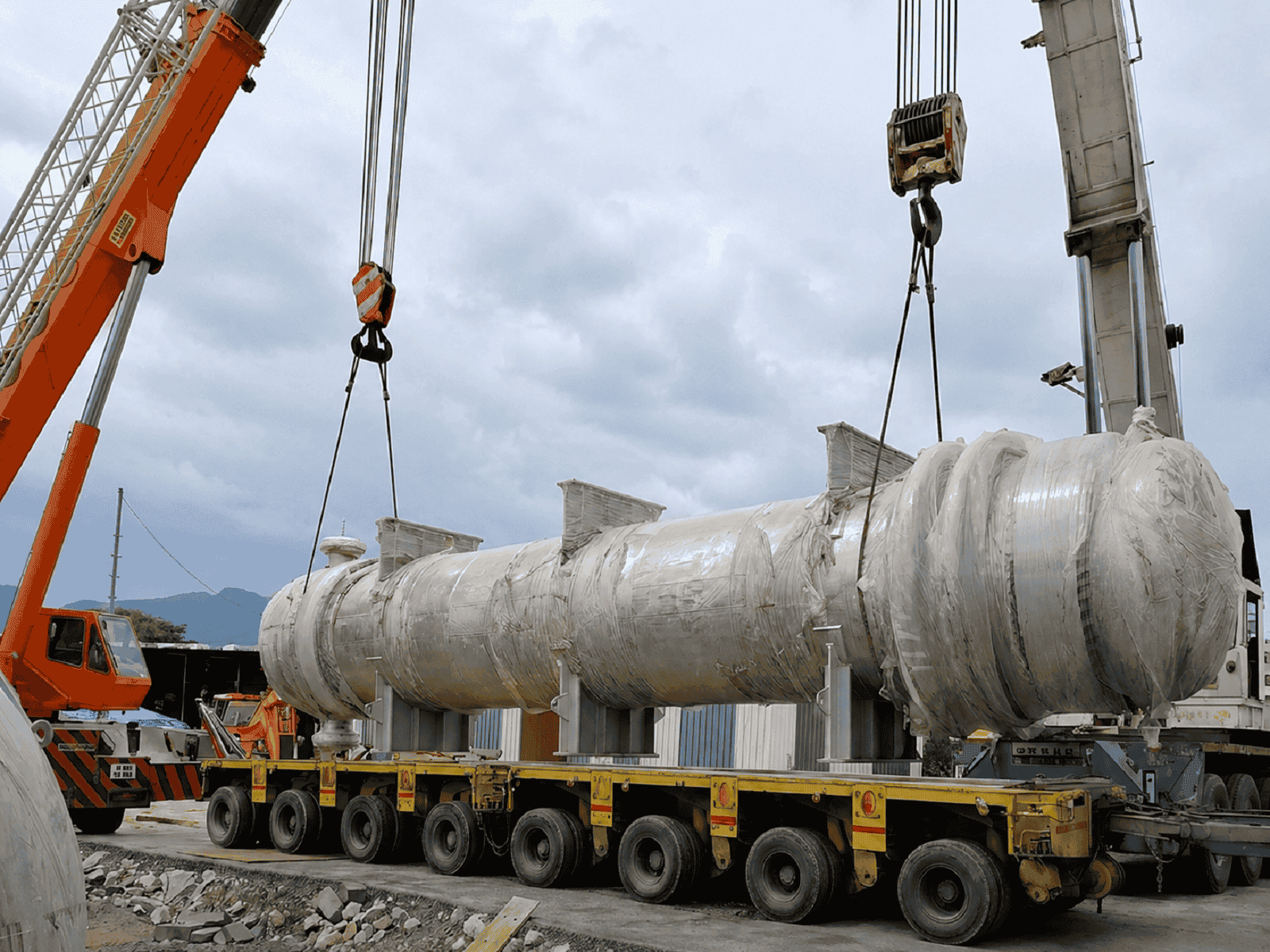
HTEPL stands at the forefront of industrial thermal engineering in India. We specialize in the custom fabrication of high-capacity shell and tube heat exchangers built to endure extreme temperatures, massive pressure loads, and aggressive process fluids.
By strictly adhering to global engineering codes, our thermal solutions provide essential reliability to critical infrastructure across the oil and gas, chemical processing, dairy, and power generation sectors. Our design philosophy centers on maximizing thermal efficiency while minimizing maintenance downtime.
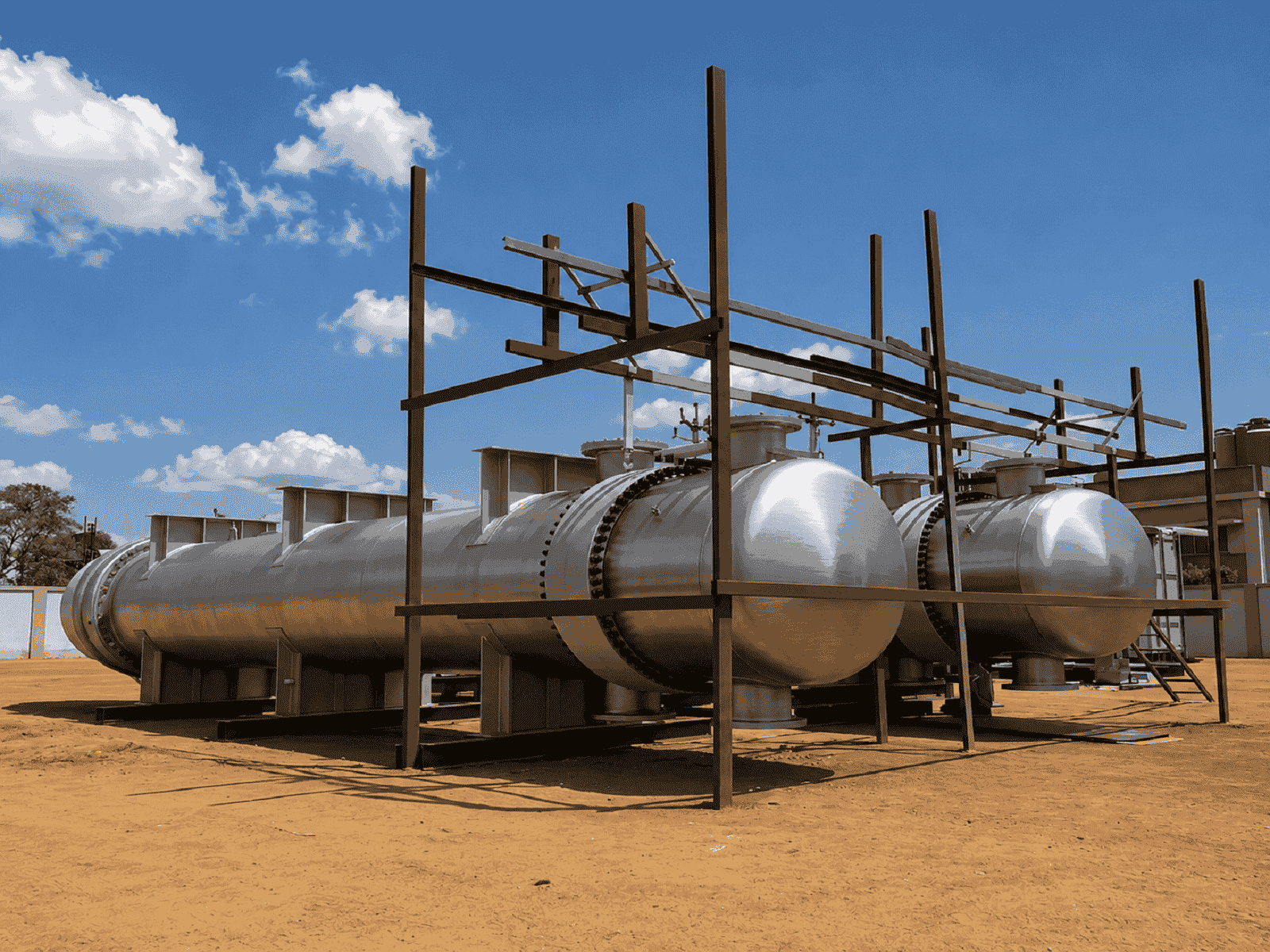
What Is a Shell and Tube Heat Exchanger?
A shell and tube heat exchanger is an industrial heat-transfer device used to move thermal energy from one fluid to another without mixing the two fluids. It consists of a group of tubes enclosed inside a larger cylindrical shell. One fluid flows through the tubes, while the other passes around the tubes through the shell side.
This arrangement provides a practical solution for heating, cooling, condensing, or recovering heat from process fluids. Because the two media remain physically separated, shell and tube heat exchangers can be used with different fluid combinations and operating conditions. They are widely suitable for process plants, refineries, chemical facilities, power plants, oil and gas installations, and other industrial systems where dependable heat transfer is required.
How Does a Shell and Tube Heat Exchanger Work?
A shell and tube heat exchanger operates by directing two fluids through separate flow paths. The first fluid enters the tube side and travels through the internal tubes, while the second fluid enters the shell and flows across the outside surfaces of those tubes.
Heat moves through the tube walls from the hotter medium toward the cooler medium. The fluids remain separated throughout the process, preventing direct contact between them. Depending on the equipment configuration, the shell-side flow may be guided across the tube bundle using internal components such as baffles.
The final outlet temperatures depend on factors such as fluid flow rates, inlet temperatures, heat-transfer surface area, fluid properties, and the selected exchanger configuration. Proper thermal and mechanical design is therefore important for achieving the required operating performance.
Types of Shell and Tube Heat Exchangers
Shell and tube heat exchangers can be manufactured in different configurations depending on thermal duty, pressure conditions, temperature range, maintenance requirements, and the characteristics of the fluids being handled.
Fixed Tube Sheet Heat Exchanger
A fixed tube sheet design has the tube sheets permanently connected to the shell. This configuration provides a relatively simple and compact construction and can be suitable for applications where the difference in thermal expansion between the shell and tubes is within acceptable design limits.
U-Tube Heat Exchanger
A U-tube exchanger uses tubes bent into a U-shaped configuration. This arrangement allows the tube bundle to accommodate thermal expansion without requiring the tubes to be straight through the shell. The bundle can also be removed for inspection and maintenance when the design permits.
Floating Head Heat Exchanger
A floating head configuration allows greater freedom for differential thermal expansion between the shell and tube bundle. It is often selected for demanding process applications where temperature differences are significant and regular access for tube-side inspection or cleaning is important.
The appropriate configuration is selected based on the actual process conditions and project requirements rather than using the same exchanger type for every application.
Why Choose Our Shell and Tube Heat Exchangers?
- Custom Thermal and Mechanical Design: Each shell and tube heat exchanger is precision-designed based on your specific process conditions, fluid velocity, pressure requirements, and thermal expansion constraints.
- ASME Compliant Manufacturing: We manufacture all equipment to applicable international standards, including ASME Section VIII and distinct customer-specific requirements. We ensure structural perfection through rigorous Non-Destructive Testing (NDT) protocols—such as Radiographic (RT), Ultrasonic (UT), Magnetic Particle (MT), and Penetrant Testing (PT)—and strict adherence to ISO quality management principles during fabrication.
- High-Efficiency Configurations: Our optimized baffle spacing and tube pitch configurations dramatically improve heat transfer rates while minimizing pressure drops and tube fouling.
- Robust Construction: Built for continuous, heavy-duty industrial service utilizing high-quality materials, AWS welding standards, and field-proven fabrication practices.
- Worldwide Supply Capability: We have extensive experience in successfully executing reliable projects for both domestic and international export markets.
Industrial Applications
Our high-performance shell and tube heat exchangers are widely used across multiple heavy industries:
- Refineries and petrochemical plants
- Oil and gas processing facilities
- Power generation and thermal plants
- Chemical and fertilizer industries
- Dairy and FMCG processing
- Process industries requiring robust, high-pressure liquid or gas cooling
Materials of Construction
We offer shell and tube heat exchangers fabricated from a diverse range of premium materials to safely accommodate different process fluids, operating temperatures, and corrosive environments.
Component |
Material Options |
| Shell & Bonnet | Boiler Quality (BQ) Plates, Carbon Steel, Stainless Steel |
| Tube Bundle | Seamless/Welded (Carbon Steel, SS304 & SS316, Duplex Stainless Steel, Copper Alloys, Titanium) |
| Tube Sheets & Baffles | Carbon Steel, Stainless Steel, Brass, Monel |
Core Benefits of Upgrading to Shell and Tube Systems
- Provides massive heat transfer surface areas within a highly compact footprint.
- Safely withstands extreme operating temperatures and exceptionally high pressures.
- Highly adaptable to a wide variety of highly corrosive or fouling process fluids.
- Allows for easy mechanical cleaning and maintenance with removable tube bundle designs (such as Floating Head or U-Tube).
- Ensures reliable, uninterrupted operation in continuous, heavy-duty process applications.
Manufacturing & Safety Standards
- ASME Boiler and Pressure Vessel Code (Section VIII, Div 1 & 2)
- TEMA (Tubular Exchanger Manufacturers Association) Classifications
- ISO-certified quality control protocols
FAQ :
How does a shell and tube heat exchanger function?
It operates by passing one process fluid through a bundle of internal tubes, while a second cooling or heating fluid circulates over those tubes within a larger pressurized shell, allowing thermal energy to transfer through the metal barriers.
Why choose this specific design over others?
This architecture provides an exceptionally large surface area for heat exchange within a small physical footprint. It is also uniquely capable of withstanding extreme internal pressures and volatile temperatures.
What configurations do you offer?
We manufacture U-Tube, Fixed Tube Sheet, and Floating Head variations. The choice depends entirely on your need for mechanical cleaning and the expected thermal expansion of the metals.
What industries rely on these systems?
They are heavily utilized in refining, power generation, dairy pasteurization, and petrochemical processing.
How do you select the construction materials?
Material selection is driven entirely by the chemical corrosiveness, operating pressure, and maximum temperature of your specific process fluids.
Are your units ASME certified?
Yes, we engineer and fabricate in total compliance with ASME codes and TEMA specifications.
What factors should be considered when selecting a shell and tube heat exchanger?
Selection should be based on the required heat load, fluid flow rates, inlet and outlet temperatures, operating pressure, fluid properties, allowable pressure drop, material compatibility, fouling characteristics, available installation space, and maintenance requirements. These parameters help determine the appropriate heat-transfer area and exchanger configuration.
Can shell and tube heat exchangers handle high-pressure applications?
Yes. Shell and tube heat exchangers can be engineered for high-pressure service when the shell, tubes, tube sheets, connections, and other pressure-retaining components are designed for the specified operating conditions. The applicable design code, materials, pressure rating, temperature, and inspection requirements must be considered during engineering.
What maintenance is required for a shell and tube heat exchanger?
Maintenance generally includes monitoring operating temperatures and pressure drop, checking for leakage, inspecting tubes and connections, and cleaning heat-transfer surfaces when fouling or deposits reduce performance. The maintenance frequency depends on the fluids, operating conditions, water quality, fouling tendency, and service environment.
Do you manufacture customized shell and tube heat exchangers in India?
Yes. Shell and tube heat exchangers can be engineered and manufactured according to the required thermal duty, pressure and temperature conditions, materials of construction, connection arrangement, installation limitations, and project-specific specifications. Customized configurations can be developed for different industrial process requirements.