How We Build Industrial Shell and Tube Heat Exchangers
Industrial processing plants are unforgiving environments. Whether handling corrosive chemicals in a refinery or managing high-pressure steam in a power plant, the thermal equipment holding the process together must be infallible.
The undisputed workhorse of these facilities is the Shell and Tube Heat Exchanger.
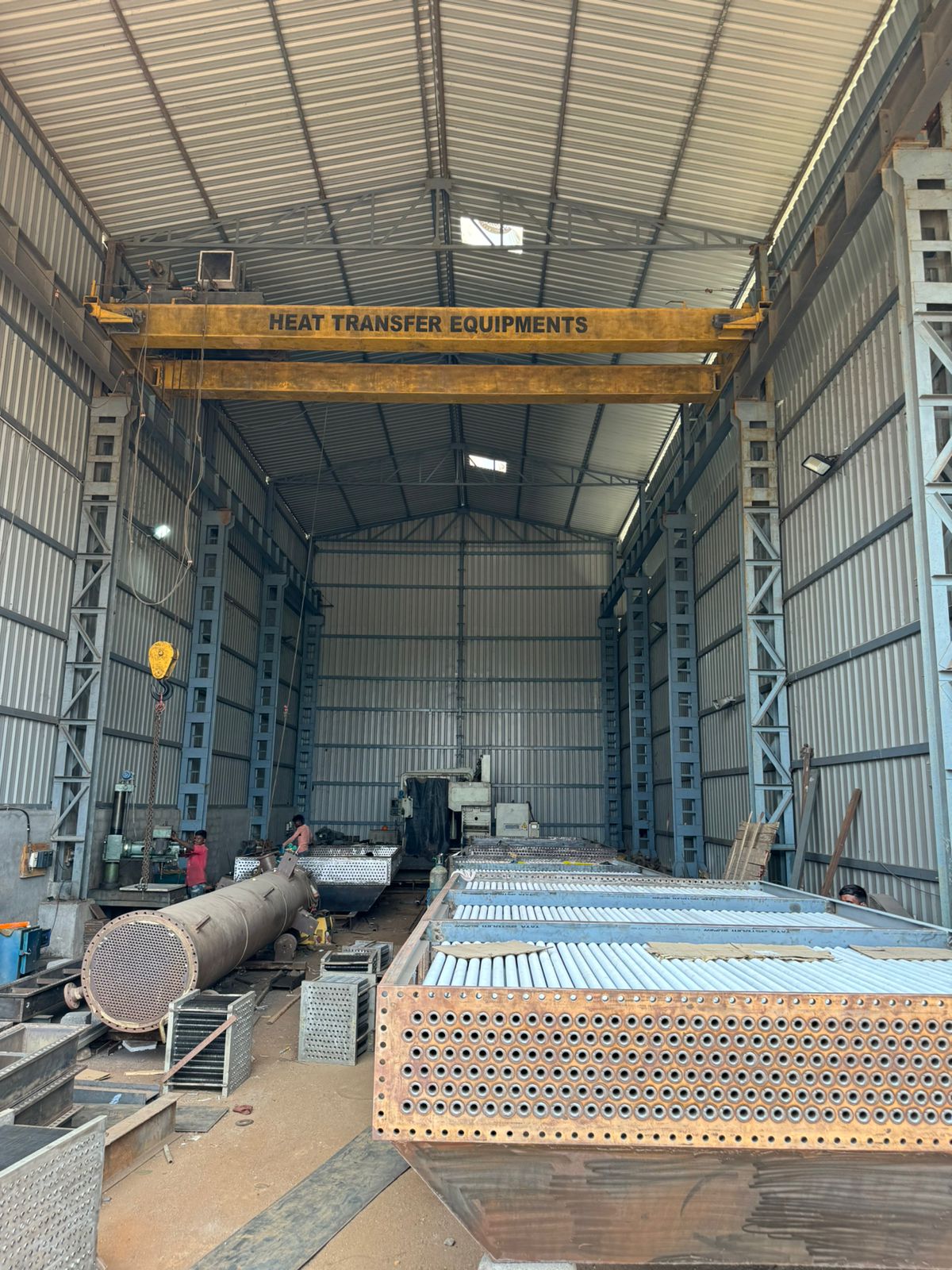
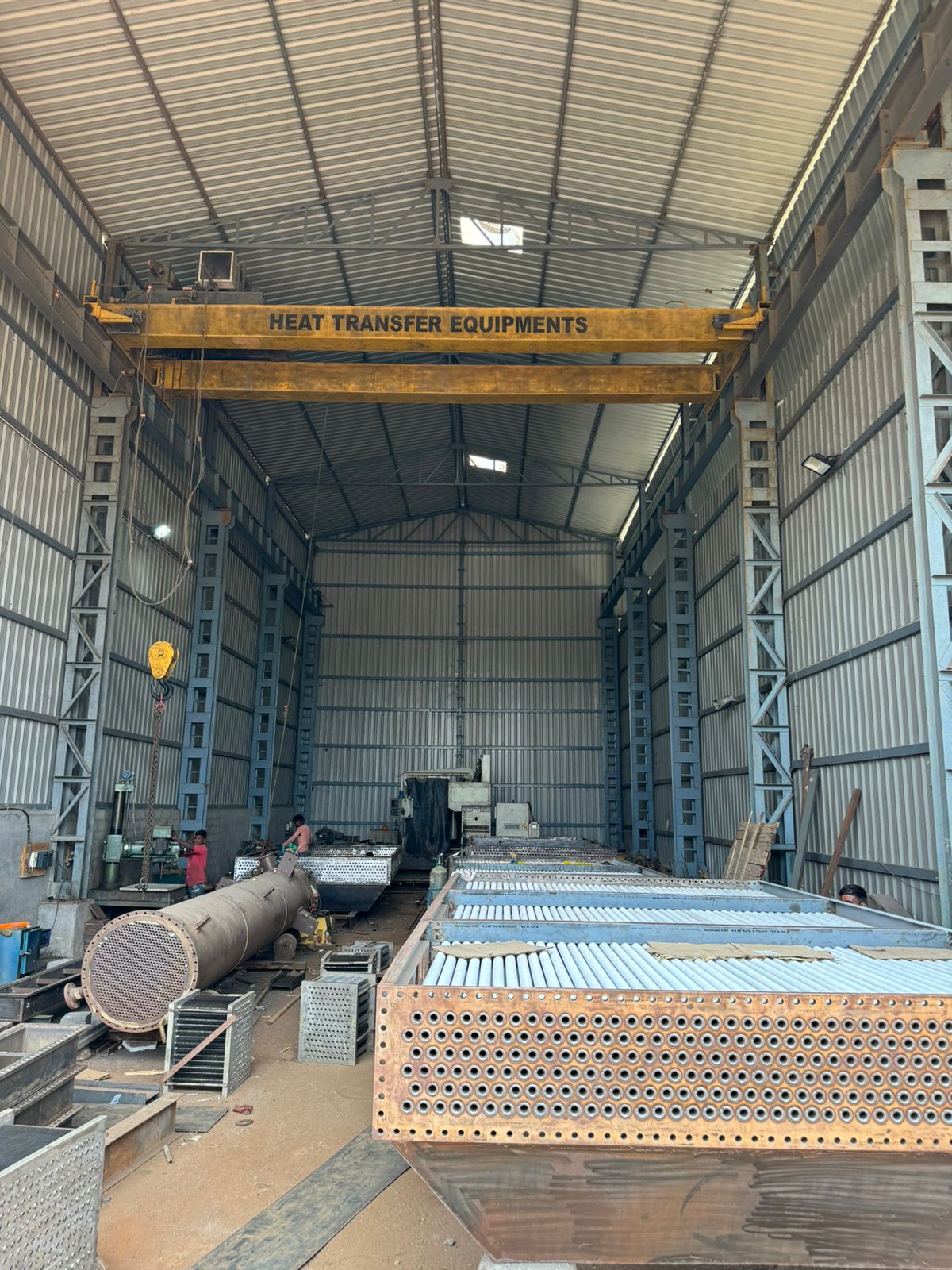
Building these colossal pressure vessels requires far more than basic metalworking. At Heat Transfer Equipments Pvt Ltd (HTEPL) in Coimbatore, fabricating a heavy-duty exchanger is a highly orchestrated process bridging advanced thermal physics, expert metallurgy, and relentless quality control.
Here is a look behind the curtain at how we transform raw steel into vital industrial infrastructure.
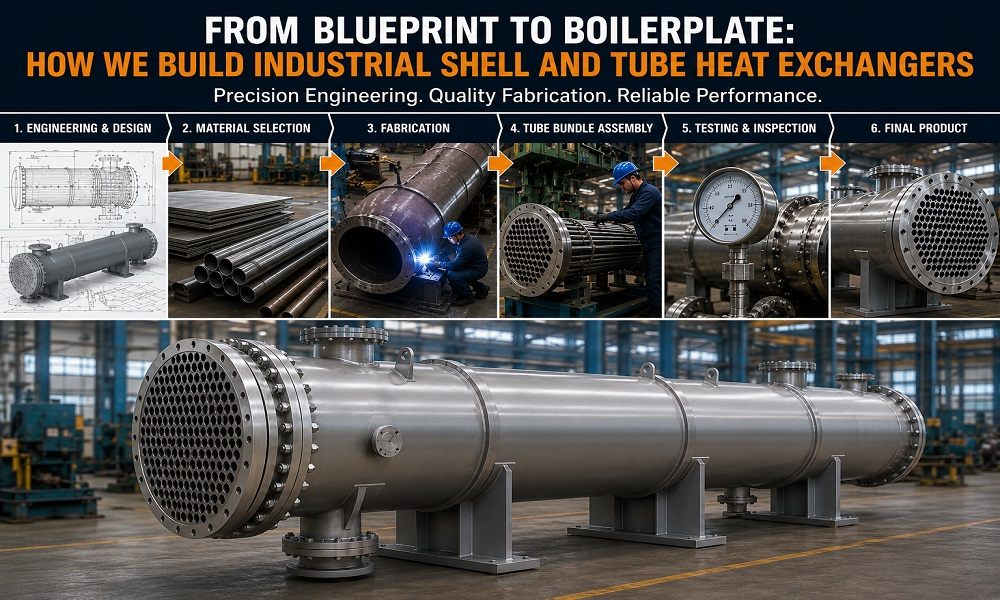
Step 1: Thermal Blueprinting and Design
The manufacturing journey begins at the engineering desk. Before any metal is cut, our design team evaluates the client’s process data and Piping and Instrumentation Diagrams (P&IDs).
The objective is to map an ideal thermal pathway. We calculate highly specific baffle arrangements, tube pitches, and pass counts to ensure maximum heat absorption while keeping fluid pressure drops within safe limits. Every mathematical model is cross-referenced with TEMA specifications and the ASME Boiler and Pressure Vessel Code to guarantee operational safety.
Step 2: Crafting the Tube Bundle
The internal tube bundle is where the actual thermal exchange occurs, demanding extreme mechanical precision.
- Tube sheet Machining: Using advanced CNC technology, we drill hundreds of highly precise, uniform holes into a thick metal plate known as the tube sheet.
- Baffle Alignment: Metal baffle plates are positioned to guide the shell-side fluid, creating turbulence that enhances cooling efficiency.
- Threading and Sealing: High-grade tubes (often Duplex, Stainless Steel, or Copper Alloys) are laced through the baffles. To prevent cross-contamination of fluids, the tube ends are either precision-welded or mechanically expanded directly into the tube sheet for an impenetrable seal.
Step 3: Shell Fabrication and Heavy Welding
Simultaneously, the heavy outer pressure shell takes shape. Thick sheets of Boiler Quality (BQ) steel or corrosion-resistant alloys are rolled into massive cylinders.
Because these shells must contain explosive pressures, standard welding practices are insufficient. All structural seams are fused strictly following AWS (American Welding Society) procedures. Once the shell is structurally sound, it is carefully slipped over the delicate tube bundle, and the final fluid nozzles and header boxes are welded into position.
Step 4: The Final Trial – NDT and Quality Assurance
A heat exchanger is never approved for dispatch based on visual completion alone. Our quality assurance relies on comprehensive Non-Destructive Testing (NDT) evaluated by certified Level II personnel to ensure absolute zero-defect fabrication.
We deploy Radiographic Testing (RT) and meticulous Radiographic Testing Film Interpretation (RTFI) to secure volumetric weld integrity, ensuring no hidden internal voids exist. Surface and sub-surface flaw detection is guaranteed through Ultrasonic Testing (UT), Magnetic Particle Testing (MT), and Penetrant Testing (PT). The process culminates in rigorous Visual Testing (VT) before the entire unit is subjected to high-pressure hydro-testing.
Engineered to Endure
Building a heavy-duty shell and tube heat exchanger is an intricate discipline where shortcuts can lead to catastrophic plant failures. From the initial thermal blueprint to the final radiographic weld inspection, HTEPL delivers equipment designed to perform flawlessly for decades.
Looking to optimize your plant’s thermal operations?
Reach out to our engineering team to discuss your custom fabrication needs.
📧 sales@heattransferequipments.com
📞 +91 94 88 444 777